
The second issue of 2026 edition of Summer Blog Series ”Translators Around The World”!
My name is Kenneth, but most people outside Denmark just call me Ken. I live in Copenhagen, so if you are ever around, feel free to reach out. I will be happy to provide tips and tricks and maybe meet for a cup of coffee or something.
I have an MA in translation and interpretation between Danish and English from back when Trados was a dongle and Google wasn’t invented yet, and after I graduated, I moved to Ireland to practice the things I had learned in an actual English-speaking country. In Dublin, I worked for Microsoft first as a localiser (which no one had told me was a thing during my studies) and later as Terminologist/Language Lead for Danish. I stayed for 3.5 years and continued in the job for 1.5 years in Copenhagen, until Danish and a number of other “small” languages were terminated as internal departments, and everything was outsourced. This was in 2004, and since then, I have had my own business and worked with that except for a couple of years where I worked as a translator in the largest Danish bank.
I am quite active on LinkedIn and various groups on Facebook – both international ones like TTNS (if you know, you know), but also a purely Danish group, and then I am a happy member of the Danish Association of Certified Translators and Interpreters (DACTI). But the community that really keeps me going are the people I meet and have met when I have travelled the world to attend and speak at conferences. I honestly believe that there is no industry in the world as inclusive as ours, and some of the people I have met are now also some of my best friends outside work.
When I’m not working (as if), travelling is probably also my biggest passion, and I really appreciate having a job where I can just go and bring my computer with me, so I can work from anywhere. When the clients are there, this is one of the biggest privileges in being an independent language specialist, I believe. I also like reading, hiking, going to concerts and festivals and hanging out with friends and family like most others, but travelling is my passion, and I feel naked, if I don’t have at least one trip in my calendar.
I was asked to describe a typical workday or week, but I honestly don’t think I have anything like that. My clients are very diverse, and during any given week I work with translation, transcreation (which I always thought was a strange term, because, in my view, it is also translation – just a bit more creative than for example technical or medical), reviews of translations from both humans and machines, creating guidelines, advising on culture, preparing presentations, testing, arbitration, general business operations and much, much more.
I was also asked how I feel about AI and the future of our profession, and I am happy to say that I believe the worst of the hype is over. I am not the biggest fan of AI, and I would not trust it for translation myself, because quality is important to me, but I can definitely see how it has its uses for inspiration and if you are a company with no budget or where you are translating huge volumes of text that most people will never read anyway. That doesn’t eliminate all the ethical, legal and environmental issues I have with AI in general, but I also think we must, to a certain extent, accommodate the wishes of our clients, if we want to stay in business. And, contrary to many, I actually see a bright future for language specialists. My own experience and what I hear from others for many languages is that the clients are now beginning to realise that what we were saying all along about the risks and shortcomings of AI was not just something we said to protect our own profession, but actual concerns that need to be addressed by humans, and not just in the loop, but in the lead.
So, for those of us who are still around, and who are willing to work with other linguistic tasks than traditional translation, even though that also seems to be coming back, though it is a slow process, I honestly believe there is still a place for us, and no one will be able to convince me otherwise. This is just the latest disruption, and though I do admit it is more disruptive than many of the others I have seen in my 25-30 years in the industry, we will weather this storm too, and I see land on the horizon.
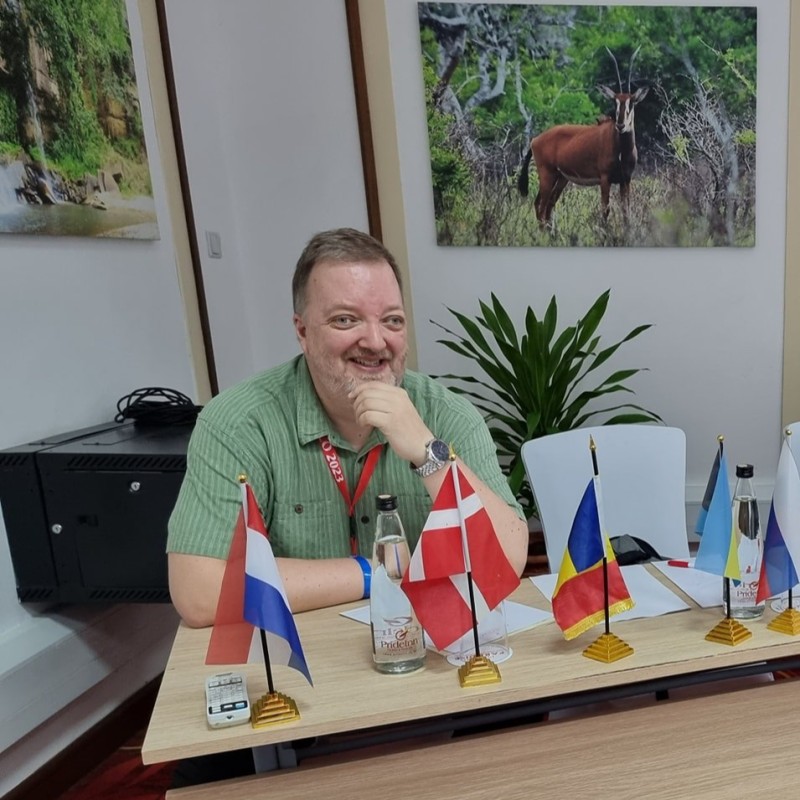
Kenneth Nielsen
Translator
The writer works with Danish and English, providing translations and related services for clients in several areas of expertise. He enjoys the liberty of his profession and values the sense of community with fellow translators from all over the world.